

Cypress Run, part 2

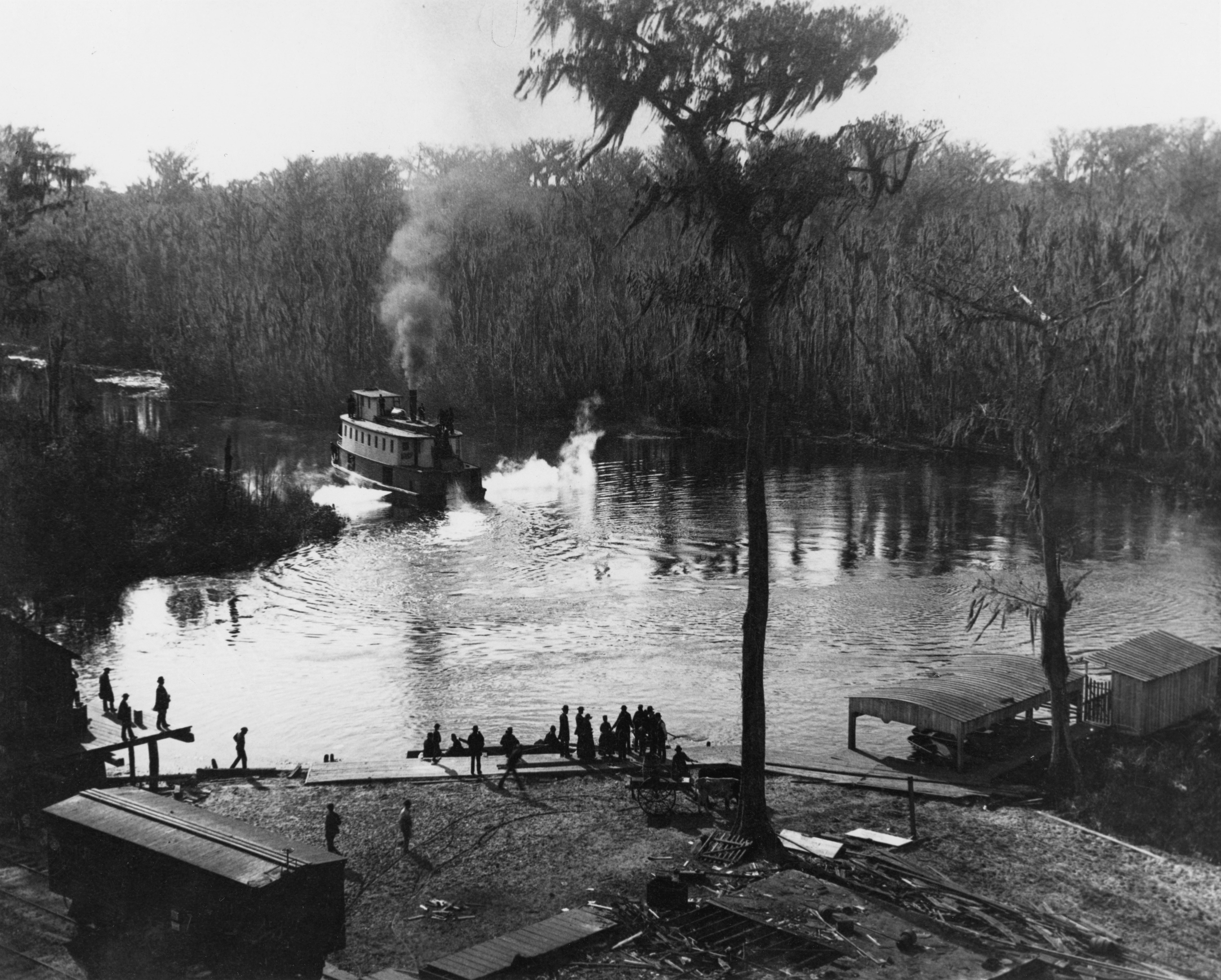
What Cypress Run Looks Like From the Keyboard
Last week, the sheriff gave you a tour of Cypress Run — the docks, the saloon, and the swamp he very strongly advised you not to wander into.
This week, I’m reclaiming my town. And I’m going to let you in on a secret: Cypress Run didn’t start as a map.
It started as a problem.
The Problem
If I was going to exile a Chicago detective to Florida in 1883, I needed somewhere to put him.
Now, I could have picked a real town. There are plenty of perfectly good ones. But I know myself, and I would have immediately fallen down a research rabbit hole and never come back out again.
(“Did this building exist in 1883?” “Was this road here yet?” “Am I legally allowed to move this entire town two miles to the left for narrative convenience?”)
At some point you have to admit defeat and make your own sandbox.
Cypress Run absolutely refused to be perfect anyway.
It wanted to be a little murky around the edges. A place that looks different in daylight than it does under gas lamps. A place that feels legitimate — but not too legitimate.
So I built a town that sits right in that uncomfortable middle.
Recently named the county seat of the entirely fictional Everfield County, it’s still trying very hard to prove it deserves the title. The courthouse is being built. The railroad depot is new. Everyone is behaving like a Very Important Place while quietly side-eyeing each other.
It’s important enough to need a sheriff.
Not established enough to be picky about which one it gets.
The Solution (Or: Making Tom Uncomfortable on Purpose)
Once I knew what the town needed to feel like, the rest became a question of logistics.
First, it had to be official enough to justify the paperwork required to send Tom there from Chicago. You don’t just ship a disgraced detective across state lines without a decent bureaucratic excuse.
Second, it had to make him deeply, personally uncomfortable.
Not wilderness — because let’s be honest, Tom would get eaten.
Not complete lawless chaos — because then his past wouldn’t matter.
What I needed was friction.
A place with rules… but not always the will to enforce them. A place where his instincts don’t quite line up with how things are done, and nobody is entirely sure whether that makes him useful or a problem.
(Answer: yes.)
And finally, it had to be a place where things were changing.
Because a town where nothing is happening is a terrible place to set a story about a man who tends to stand too close to explosions.
On Paper
The town didn’t really come together until I figured out one very important thing:
Cypress Run isn’t a town.
It’s a bottleneck.
A choke point in the river — the furthest place inland where freight ships can go before the water gets too shallow and the turns get too tight.
Everything has to stop here.
And once I had that, the rest of the town basically built itself while I watched.
A bottleneck needs a dock. A dock needs warehouses. Warehouses need someone to keep the books… and someone else to make sure those books stay flexible.
Then come the merchants. The innkeepers. The people who see opportunity and immediately decide to take advantage of it.
(And eventually, the law — whether the town asked for it or not.)
The railroad pushes in from the north because of course it does. The courthouse goes up because someone needs to look official. The bank plants itself on Main Street like it was always meant to be important.
And around all of it, the swamp just… exists. Waiting patiently to reclaim anything that isn’t nailed down. (And also to leak in when I'm writing at three in the morning and can only conjure a fuzzy idea of the surroundings... is it swampy? Yeah, probably. Thus, it encroaches.)
Why Here?
Cypress Run exists because the Calusa River narrows.
Freight ships can make it this far, but then they have to turn around or risk getting mired and trapped in the bends.
So everything stops.
Goods come off the boats here. Supplies. Equipment. Crates with very official documentation attached to them. And occasionally… crates that are a little less official.
It’s also the best place to send things back downriver toward the Gulf: Timber. Cattle. Other things that nobody asks too many questions about if they know what’s good for them.
The Complication
For a while, that balance worked.
Then someone (me) had the bright idea to name Cypress Run the county seat.
Which means more paperwork. More oversight. More people paying attention.
And then the railroad shows up.
Which means more access. More money. More eyes. Fewer places for things to quietly disappear.
For a town that’s been thriving in the gray areas, that’s… not ideal. Unless you're an author who needed a convenient excuse for dead bodies to randomly start turning up. Then it's perfect!
A Town in Transition
Cypress Run is still figuring out what it wants to be.
A respectable, growing town with a courthouse and a railroad connection?
Or the same rough-edged river hub it’s always been — just dressed up to look more official?
That tension is where the story lives.
And honestly, it’s what made the town feel real to me in the first place.
Next Time…
The town may have found its shape, but it’s the people who decide what that shape actually becomes.
Next time, we’ll take a closer look at some of the people quietly keeping Cypress Run running behind the scenes — and the ones who might be causing more trouble than they’re worth.
Until then, my curious little gatorlings!
Photo Credit:
(1886) River Steamboat "Okeehumkee" by Landing. Florida United States of America Silver Springs, 1886. [Place of Publication Not Identified: Publisher Not Identified] [Photograph] Retrieved from the Library of Congress, https://www.loc.gov/item/2021669929/